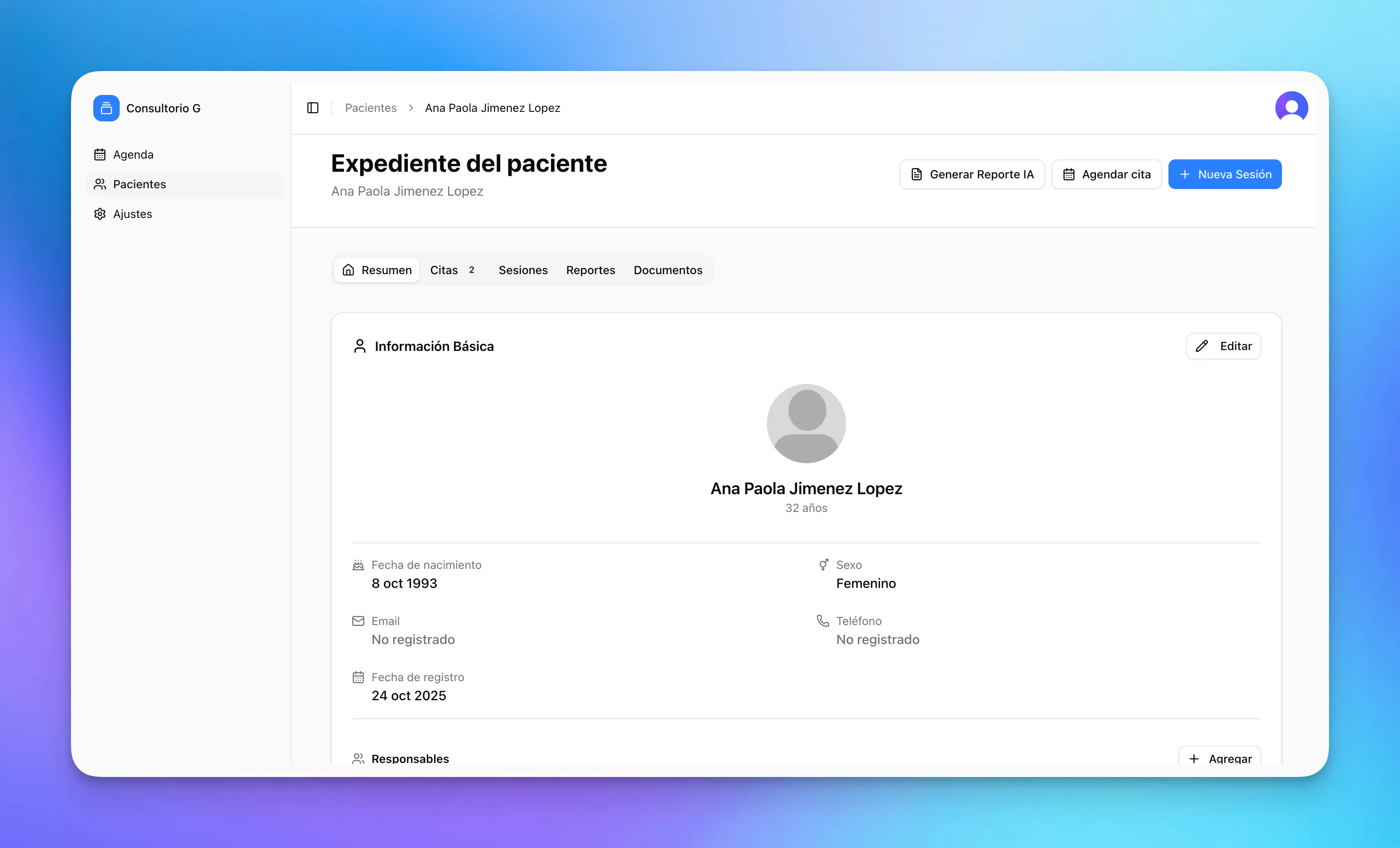
Consultorial is a SaaS product I am building for doctors, therapists, psychologists, and other clinicians who run private practices in Mexico.
The idea is simple: help clinicians manage their practice from one place, while using AI to reduce the administrative work that often surrounds clinical care.
A private practice may look small from the outside, but there is a lot happening behind the scenes. Clinicians need to manage patients, appointments, notes, reports, documents, follow-ups, and sometimes other practitioners or staff members.
All of that work matters.
But not all of it should consume the clinician’s time and attention.
Consultorial came from the belief that small practices deserve software that feels modern, calm, and useful — not an enterprise hospital system, not a generic calendar, and not a collection of spreadsheets and folders held together by habit.
I want to build an AI-native product that helps small practices and individual practitioners do more with less administrative effort.
What I am building
Consultorial brings together the core workflows of a private practice:
- Patient management
- Appointments and agenda
- Clinical notes
- AI-generated summaries
- Patient history and progress summaries
- AI-assisted report generation
- Documents and PDF exports
- Team members, roles, and permissions
The goal is not to build every possible healthcare feature from day one.
The goal is to build the essential system a small practice needs to stay organized, work professionally, and use AI where it can meaningfully reduce effort.
A clinician should be able to understand a patient’s history, document a session, summarize progress, generate a report, and keep everything organized without jumping between disconnected tools.
That sounds simple.
But in healthcare software, simple is rarely simple.
Why I am building it
I am interested in products that sit close to real human workflows.
Consultorial is not just a dashboard. It is a tool that touches how professionals document their work, remember context, communicate progress, and manage responsibility.
For many clinicians, documentation is necessary but time-consuming. Writing notes, preparing reports, reviewing patient history, and organizing documents can take valuable time and mental energy.
I do not think software should try to replace the clinician.
But I do think software can give clinicians more leverage.
AI can help summarize notes, organize information, draft reports, surface patient history, and reduce repetitive writing. It can help clinicians move faster without removing their judgment from the process.
That is the part that makes Consultorial exciting to me.
The product is not about making healthcare feel automated or impersonal. It is about giving clinicians better tools so they can spend less time fighting their workflow and more time doing the work that actually requires their expertise.
The AI-native approach
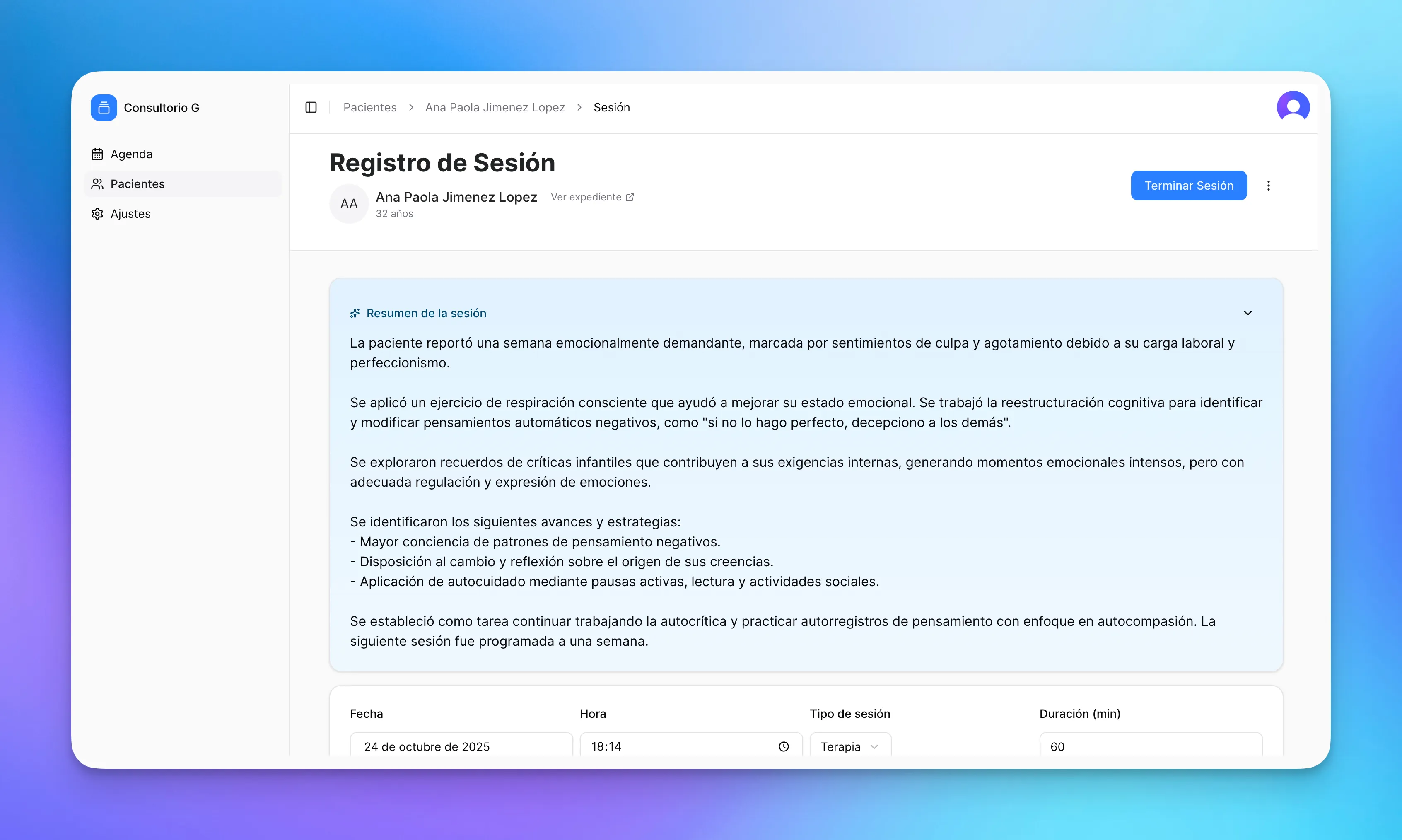
One of the most important ideas behind Consultorial is that AI should not be an afterthought.
I am building the product with AI capabilities from the beginning, including integrations with several AI models, because I want the core workflows to be designed around what AI can help with responsibly.
Report generation is one example, but it is not the only one.
Consultorial can also use AI to summarize clinical notes, generate brief session summaries, help review a patient’s history, and make it easier to understand progress over time.
The idea is not to have a single “AI button.”
The idea is to make AI part of the workflow.
After a session, AI can help create a clear summary.
When reviewing a patient, AI can help surface important context.
When preparing a report, AI can help transform fragmented notes into a structured draft.
When looking at progress over time, AI can help reduce the effort required to understand what has changed.
But the key word is help.
In a product like this, AI should assist, not decide.
The clinician remains responsible for reviewing, editing, and approving the final output. AI can help with structure, language, summarization, and first drafts, but it should not invent information or replace professional judgment.
That boundary is important.
The hard part: trust
The hardest part of Consultorial is not only technical.
It is building something that feels trustworthy.
Healthcare-related software has a different emotional weight than many other SaaS products. The information is personal. The workflows are sensitive. The user needs to feel that the product is reliable, private, and respectful of their work.
That affects every product decision.
The interface should feel calm, not noisy.
The AI should feel useful, not magical.
The product should be honest about what it does and what it should not do.
Consultorial is not being designed to diagnose patients or replace clinical judgment. It is focused on documentation, organization, summarization, and administrative support.
The more powerful AI becomes, the more important that distinction becomes.
What I am learning
Consultorial is teaching me that AI product design is not just about calling a model and showing the result.
The real work is deciding where AI belongs, how much control the user should have, how the output should be reviewed, and how to make the experience useful without making it feel unsafe.
It is also teaching me to think carefully about the difference between a feature and a workflow.
A calendar is a feature.
But helping a clinician move from a patient appointment to notes, summaries, reports, and follow-up context is a workflow.
That is where the value lives.
For Consultorial, the goal is not to impress users with AI.
The goal is to make their work easier.
Current status
Consultorial is currently in active development.
It is the project where many of my previous lessons are coming together.
Staybit taught me about B2B workflows, permissions, trust, and operational complexity.
LastRelease taught me about rich text editing, publishing workflows, activation, and time to value.
Consultorial combines many of those lessons in a product category where clarity, responsibility, and workflow design matter a lot.
It is also pushing me to think more deeply about what AI-native software should feel like when the stakes are higher than convenience.
Looking ahead
My goal with Consultorial is to build a product that feels useful from the first serious use.
A clinician should not need to spend weeks configuring the system before it makes sense. The product should help them organize their practice, document their work, understand patient history, and generate professional reports with less friction.
The challenge is to keep the product focused.
Healthcare and practice management can become enormous categories very quickly. AI adds even more possibilities.
But the first version does not need to be everything.
It needs to be valuable.
Consultorial is a product about helping clinicians run their practice with more clarity and more leverage.
In the process, it is teaching me a lot about building software that needs to be not only useful, but responsible.